Category: Uncategorized

  • How to Build a Consulting Business That Works While You Sleep (5-Step Framework)

    How to Build a Consulting Business That Works While You Sleep (5-Step Framework)

    Are you still trapped in the "time-for-money" cage, desperately trading every hour for revenue while your competitors build SCALABLE SYSTEMS that generate income without their constant presence?

    If you're a consultant earning $150K+ annually but feeling like a hamster on a wheel, this framework will show you how to build a business ENGINE that runs 24/7. We're talking about creating SEMI-PASSIVE REVENUE STREAMS that multiply your expertise without multiplying your calendar commitments.

    The brutal truth? Most consultants never escape the "billable hours dependency" because they think scaling means hiring more people. Wrong. Smart consultants build SYSTEMATIC REVENUE MACHINES that work while they sleep.

    Step 1: Audit Your Current Revenue Model (The Foundation Analysis)

    Before you can build a self-sustaining consulting engine, you need to understand exactly how "time-dependent" your current business actually is.

    Calculate Your Time-to-Revenue Ratio

    Track every revenue dollar for the next 30 days and categorize it:

    • ACTIVE INCOME: Requires your direct presence (client calls, custom deliverables, one-off projects)
    • SEMI-PASSIVE INCOME: Front-loaded work with ongoing returns (courses, productized services, licensing deals)
    • PASSIVE INCOME: True hands-off revenue (book royalties, affiliate commissions, automated course sales)

    Most consultants discover they're 85%+ dependent on active income. This creates a dangerous business vulnerability – when you stop, revenue stops.

    image_1

    Identify Your "Repeatability Assets"

    Look for patterns in your client work. What frameworks, templates, or methodologies do you deliver repeatedly? These are your goldmine for productization. A business systems consultant might notice they rebuild the same workflow optimization process for 70% of their clients. That's a PERFECT CANDIDATE for systematic packaging.

    Revenue Ceiling Analysis

    Calculate your maximum earning potential with current methods. If you bill $200/hour for 30 hours weekly, your ceiling is $312K annually. No matter how hard you work, you can't break that barrier without fundamental business model changes.

    Step 2: Productize Your Expertise (The Packaging Engine)

    This is where most consultants get stuck. They think productization means "dumbing down" their services. Actually, it means SYSTEMATIZING your brilliance so it can work without you.

    Create Fixed-Price Offerings

    Transform your most valuable consulting deliverables into standardized packages with predetermined scopes and pricing. Instead of "custom business strategy development" (time-dependent), offer "90-Day Growth Acceleration Blueprint" (outcome-dependent) for a flat $15K.

    This shift accomplishes three critical objectives:

    • Eliminates scope creep and endless revision cycles
    • Creates predictable revenue forecasting capabilities
    • Allows delivery optimization and systematization

    Build Your Methodology Framework

    Document your consulting process into a repeatable system. Break down complex strategic work into modular components that can be delivered consistently. A leadership consultant might create the "Executive Presence Transformation Protocol" – a 6-week program with predefined milestones, assessments, and deliverables.

    Develop Self-Serve Products

    Create lower-touch versions of your expertise that clients can purchase and consume independently. This captures revenue from prospects not ready for full consulting engagement while pre-qualifying serious buyers for higher-ticket work.

    Step 3: Build Semi-Passive Revenue Streams (The Multiplication Strategy)

    True passive income requires FRONT-LOADED EFFORT with ongoing returns. Here's how to build revenue streams that compound your expertise:

    Online Course Development

    Package your frameworks into comprehensive learning experiences. A systems integration consultant earning $300K annually might create a $2,000 course teaching their proprietary integration methodology. With 200 students annually, that's $400K in additional revenue requiring minimal ongoing involvement.
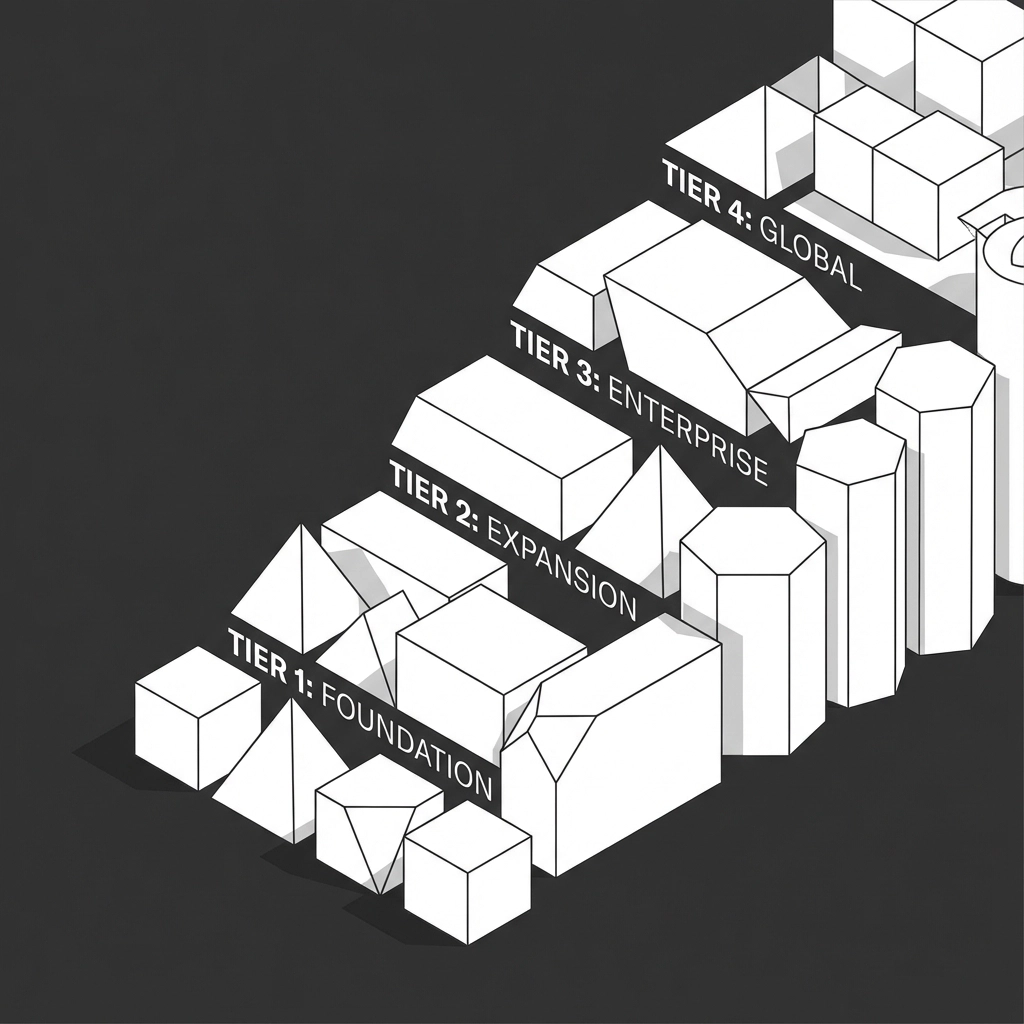
    image_2

    Licensing and Certification Programs

    Develop structured programs where other professionals can become certified to deliver your methodology. Charge certification fees ($5K-15K per person) plus annual licensing fees ($2K-5K). This scales your expertise through others while generating recurring revenue.

    Performance-Based Agreements

    Structure contracts where you earn based on client results rather than time investment. A revenue optimization consultant might take 15% of the revenue increase they generate for clients. This creates UNCAPPED EARNING POTENTIAL without proportional time increases.

    Knowledge Products and Tools

    Create standalone assessments, templates, or software tools that clients use independently. A workflow consultant might develop a $500 productivity audit tool that generates ongoing sales without additional development work.

    Step 4: Create Scalable Delivery Systems (The Automation Engine)

    Building semi-passive revenue requires SYSTEMATIC DELIVERY MECHANISMS that minimize your direct involvement while maintaining quality outcomes.

    Asynchronous Content Delivery

    Shift from live, real-time delivery to pre-recorded, self-paced learning experiences. Instead of conducting live workshops for each client, create comprehensive video series with supporting materials clients access on-demand.

    Automated Client Onboarding

    Build systematic processes that guide new clients through initial stages without your direct involvement. Use assessment tools, welcome sequences, and structured frameworks to gather information and set expectations before any human interaction occurs.

    image_3

    Community-Based Support Systems

    Create peer learning environments where clients support each other, reducing your direct support requirements. A mastermind format or private community can provide ongoing value while requiring minimal facilitator involvement.

    Systematic Follow-Up and Upsell Processes

    Implement automated sequences that nurture client relationships and present additional service opportunities. This creates additional revenue touchpoints without requiring manual outreach for each opportunity.

    Step 5: Integrate and Optimize Your Revenue Engine (The Orchestration System)

    The final step involves creating a COHESIVE ECOSYSTEM where all revenue streams work together to amplify your overall business performance.

    Create Your Revenue Funnel Architecture

    Design a systematic client journey that moves prospects through increasing levels of engagement and investment:

    • Entry Level: Free content and low-cost products ($50-500)
    • Engagement Level: Mid-tier training and group programs ($2K-10K)
    • Premium Level: High-touch consulting and implementation ($15K-100K+)

    Each level pre-qualifies prospects for the next, creating efficient sales processes while maximizing revenue per client relationship.

    Build Your Content Distribution Engine

    Develop systematic content creation and distribution processes that establish thought leadership while feeding your revenue streams. Blog posts become course modules. Course modules become book chapters. Book chapters become speaking presentations. Everything interconnects and amplifies.

    Implement Performance Tracking Systems

    Monitor key metrics across all revenue streams:

    • Revenue per client across different service tiers
    • Conversion rates between funnel levels
    • Time investment versus revenue generation ratios
    • Customer lifetime value across different acquisition channels

    Optimize and Scale Successful Systems

    Focus expansion efforts on revenue streams showing strongest performance metrics. If online courses generate 3x ROI compared to custom consulting, systematically build more course offerings while reducing time-dependent service availability.

    The Transformation Outcome

    Following this framework transforms your consulting business from a "personal services" operation into a SCALABLE KNOWLEDGE BUSINESS. Instead of trading time for money, you're building SYSTEMATIC REVENUE GENERATION that compounds your expertise.

    Successful implementation typically results in:

    • 40-60% reduction in time-dependent revenue within 12 months
    • 2-3x increase in revenue per hour of effort invested
    • Multiple income streams providing business resilience and growth opportunities
    • Predictable revenue forecasting enabling strategic business decisions

    The key insight: Building a consulting business that works while you sleep isn't about eliminating client service. It's about creating SYSTEMATIC LEVERAGE that multiplies your impact while reducing your direct time investment per revenue dollar generated.

    Your expertise becomes an asset that generates returns long after the initial development work is complete. That's how you build a consulting business that truly works while you sleep.

  • Overcome Fee Compression in Consulting: 4 Proven Strategies That Work

    Overcome Fee Compression in Consulting: 4 Proven Strategies That Work

    Are you trapped in the "marketplace dependency" death spiral where clients shop for the lowest bidder and your profit margins shrink every quarter?

    If you're a high-achieving consultant earning $500K-$1.5M annually but finding yourself in bidding wars against offshore teams charging 80% less than your rates, you're experiencing what we call "fee compression syndrome." This isn't just a pricing problem: it's a STRATEGIC POSITIONING crisis that's keeping you locked into commodity-level thinking.

    Here's the brutal reality: Every minute you spend on Upwork, Freelancer, or similar platforms, you're training the market that your expertise is interchangeable. You're not building a business: you're building a sophisticated JOB that will never scale beyond your personal capacity.

    The Hidden Cost of the "Race to the Bottom"

    Fee compression happens when consultants compete primarily on price rather than value delivery. The symptoms are unmistakable:

    • Clients opening with "What's your hourly rate?" instead of "Can you solve this problem?"
    • Project scopes expanding while budgets remain flat
    • Constant pressure to match "cheaper alternatives"
    • Revenue plateaus despite working longer hours

    image_1

    This downward spiral isn't just about money: it's about market positioning. When you compete on price, you're essentially telling prospects that your methodology, experience, and results are IDENTICAL to every other consultant in your space.

    Status: UNSUSTAINABLE. Margin compression accelerating.

    Strategy #1: Expand and Monetize Your Service Architecture

    Instead of defending your current pricing model, EXPAND your service stack to justify premium positioning. This isn't about adding more deliverables to existing projects: it's about systematic service architecture that creates multiple revenue streams.

    Implementation Framework:

    • Tier 1: Diagnostic and strategy (high-margin, low-touch)
    • Tier 2: Implementation oversight (recurring revenue model)
    • Tier 3: Optimization and scaling (outcome-based pricing)

    Smart consultants stop selling "consulting hours" and start selling "business transformation systems." When a client asks for your rate, your response becomes: "Which transformation outcome are you looking to achieve?" This immediately shifts the conversation from cost to VALUE.

    Create service packages that bundle strategy, implementation, and ongoing optimization. Price these packages based on the business impact they deliver, not the time they require. A client paying $50K for a system that generates $500K in additional revenue isn't buying your time: they're buying a 10x ROI.

    Result: Price becomes secondary to outcome delivery.

    Strategy #2: Increase Operational Efficiency Through Systematic Automation

    Protect your margins by leveraging technology to ELIMINATE manual processes that drain profitability. This isn't about working faster: it's about working systematically.

    Organizational Flowchart

    Core Efficiency Multipliers:

    • Automated Reporting Systems: Client dashboards that update in real-time without manual intervention
    • Standardized Delivery Frameworks: Repeatable methodologies that reduce project preparation time by 60%
    • Template Libraries: Pre-built solutions that accelerate implementation without compromising quality

    The goal is operational leverage: Each hour of your expertise generates 3-5x more client value through systematic delivery. When competitors are manually creating custom solutions for every project, you're deploying proven frameworks that deliver faster results with higher consistency.

    This efficiency advantage allows you to maintain premium pricing even when facing fee pressure. While competitors extend timelines to preserve margins, you deliver superior results in compressed timeframes.

    Status: OPERATIONAL EFFICIENCY optimized. Margin protection active.

    Strategy #3: Refine Client Relationships Through Strategic Advisory Positioning

    Transform your role from "external consultant" to "strategic partner" by demonstrating ongoing business impact rather than project completion.

    image_2

    Strategic Positioning Protocol:

    • Monthly Impact Reporting: Quantified business metrics tied directly to your interventions
    • Quarterly Strategic Reviews: Forward-looking sessions that position you as growth catalyst
    • Annual Planning Integration: Embedding your methodology into their long-term strategy

    When clients view you as instrumental to their business success rather than a temporary resource, price sensitivity decreases dramatically. They're not evaluating "consulting costs": they're protecting "strategic investments."

    Build reporting systems that track business outcomes rather than activity metrics. Instead of "Hours Worked: 40," your reports show "Revenue Impact: +$125K, Cost Reduction: $45K, Process Efficiency: +30%." This documentation creates undeniable value proof that justifies premium positioning.

    The key insight: Clients who see measurable ROI from your work don't shop for alternatives. They increase engagement.

    Result: Price objections become value confirmations.

    Strategy #4: Target Specialized Market Niches for Premium Positioning

    Escape the "general consultant" commodity trap by developing deep expertise in specific industry verticals or business challenges. Specialization creates pricing power through scarcity and expertise depth.

    Niche Selection Framework:

    • Industry Focus: Target sectors with complex regulatory requirements or specialized operational challenges
    • Problem Focus: Become the definitive expert on specific business transformation areas
    • Outcome Focus: Specialize in delivering measurable results that general consultants can't achieve

    Confident Business Professional

    When you're the ONLY consultant in your network who has successfully scaled SaaS companies from $2M to $20M ARR using systematic operational frameworks, fee compression becomes irrelevant. Clients aren't comparing you to general business consultants: they're evaluating whether they can afford NOT to work with the proven expert.

    Specialized positioning also drives referral momentum. Happy clients in your niche become active advocates who refer similar companies facing identical challenges. This creates a self-reinforcing cycle where your reputation builds vertical market dominance.

    Advanced Implementation: Develop proprietary methodologies specific to your niche. Instead of applying generic business principles, create systematic approaches that address industry-specific challenges. This intellectual property becomes impossible to commoditize.

    Status: MARKET SPECIALIZATION achieved. Competitive differentiation established.

    Breaking Free from Marketplace Dependency

    These four strategies work synergistically to eliminate fee compression and marketplace dependency. When you combine expanded service architecture with operational efficiency, strategic positioning, and niche specialization, you create what we call "consulting business independence."

    Instead of competing for projects, prospects seek you out for solutions. Instead of justifying your rates, you're explaining why your waiting list exists. Instead of working IN your business, you're working ON systematic growth.

    The transformation isn't just financial: it's operational. You move from reactive service delivery to proactive business building. From project-based revenue to systematic income generation.

    Next Implementation Step: Choose ONE of these strategies and implement it systematically over the next 90 days. Document your results. Measure impact. Then layer in the additional strategies to compound your positioning advantage.

    The consultants who escape fee compression aren't the ones who work harder: they're the ones who work systematically to build positioning advantages that make price competition irrelevant.

    Ready to implement systematic consulting business growth that eliminates marketplace dependency? Start with a strategic assessment to identify which positioning strategy will deliver the fastest ROI for your specific situation.

  • Scale Consulting Without Increasing Headcount: The Complete Guide

    Scale Consulting Without Increasing Headcount: The Complete Guide

    Are you hitting that dreaded ceiling where taking on one more client means working 80-hour weeks? You're not alone. Most consultants generating $300K-$500K annually face the same "scaling paradox" – every new client demands MORE of your personal time, not less.

    Here's the brutal truth: hiring your way to scale is a trap. Every new employee adds $75K-$120K in annual overhead BEFORE they generate a single dollar of revenue. Meanwhile, you're still the bottleneck for every strategic decision, client relationship, and quality control checkpoint.

    But what if you could serve 3x more clients with the EXACT same team size?

    The Systematic Scaling Framework

    Smart consultants don't scale by adding bodies – they scale by building SYSTEMS that amplify their existing capacity. This isn't about working harder; it's about "engineering workflows" that multiply your output without multiplying your headcount.

    image_1

    Strategy #1: Automate the Repetitive Workload

    The average consultant spends 40% of their billable time on tasks that follow identical patterns week after week. Client intake processes, status reporting, research compilation, proposal generation – these are systematic workflows disguised as "custom consulting work."

    TIME AUDIT REALITY CHECK: Track every 15-minute block for one full week. You'll discover that 20-25 hours are spent on repetitive processes that could run automatically.

    Start with your biggest time drain. Most consultants waste 8-12 hours weekly answering the same client questions over and over. Build a comprehensive knowledge base with:

    • Project methodology explanations
    • Common troubleshooting guides
    • Template responses for frequent requests
    • Self-service resources for standard deliverables

    Implementation Status: Within 60 days, expect to reclaim 15-20 hours weekly through systematic automation of repetitive workflows.

    Strategy #2: Productize Your Expertise

    Stop treating every engagement like a "custom snowflake." High-performing consultants identify the 3-5 core problem patterns they solve repeatedly and build standardized delivery frameworks around them.

    Instead of billing hourly for completely customized solutions, create structured service packages:

    • Discovery Package: Standardized assessment methodology with predictable deliverables
    • Implementation Package: Systematic deployment process with defined milestones
    • Optimization Package: Structured improvement framework with measurable outcomes

    This shift from "bespoke consulting" to "systematic service delivery" allows you to serve multiple clients simultaneously without proportional time increases.

    image_2

    CAPACITY MULTIPLICATION: Productized services typically allow 2-3x client capacity with the same time investment because you're leveraging proven frameworks instead of reinventing solutions.

    Strategy #3: Build Smart Communication Systems

    The #1 bottleneck for scaling consultants isn't technical expertise – it's communication management. Every client relationship generates 15-20 routine touchpoints monthly that demand your immediate attention.

    Smart consultants automate communication workflows:

    • Automated project status updates with real-time progress tracking
    • Self-service client portals for document access and milestone visibility
    • Systematic escalation protocols that filter urgent issues from routine requests
    • Template-based responses for common questions and requests

    This systematic approach transforms you from "always-on firefighter" to "strategic orchestrator" who intervenes only when high-value decisions are required.

    Strategy #4: Leverage Strategic Partnerships

    Rather than hiring full-time specialists, build a network of trusted implementation partners for specialized tasks outside your core expertise. Web development, market research, technical writing – these capabilities can be accessed on-demand without fixed overhead costs.

    Partnership Selection Criteria:

    • Proven track record with similar project types
    • Transparent pricing structure aligned with project budgets
    • Systematic communication protocols for seamless collaboration
    • Quality standards that match your brand requirements

    image_3

    COST ADVANTAGE: Strategic partnerships typically cost 30-50% less than equivalent full-time hires while providing access to specialized expertise on an as-needed basis.

    Strategy #5: Implement Value-Based Pricing Models

    Escape the "time-for-money trap" by shifting from hourly billing to outcome-based pricing. When clients pay for RESULTS rather than hours, you're incentivized to deliver efficiently rather than slowly.

    Pricing Structure Evolution:

    • Phase 1: Fixed-price packages for standardized deliverables
    • Phase 2: Performance bonuses tied to measurable client outcomes
    • Phase 3: Retainer models for ongoing strategic advisory relationships

    This systematic pricing evolution typically increases per-client revenue by 40-60% while reducing time investment through improved efficiency incentives.

    Implementation Timeline: 90-Day Scaling Engine

    Days 1-14: System Audit & Foundation

    • Complete comprehensive time tracking across all client activities
    • Identify top 5 automation opportunities with highest time-saving potential
    • Document existing workflows and decision-making processes
    • Research automation platforms and partnership opportunities

    Days 15-45: Core System Deployment

    • Implement your highest-impact automation workflow
    • Build initial knowledge base with common client questions and solutions
    • Establish communication protocols and client portal access
    • Test systematic processes with existing client base

    Days 46-90: Optimization & Scale Preparation

    • Refine automated workflows based on real-world performance data
    • Expand automation to secondary processes with proven ROI
    • Document standardized service packages and pricing models
    • Market enhanced capabilities and improved delivery efficiency

    image_4

    MEASURABLE OUTCOMES: Consultants following this systematic approach typically achieve 25-30% capacity increases within 90 days while maintaining quality standards and client satisfaction scores.

    Technology Stack for Systematic Scaling

    The right technology infrastructure acts as your "scaling engine" – multiplying capacity without adding complexity. Focus on platforms that offer:

    • Comprehensive automation rather than point solutions
    • Transparent pricing that scales with usage rather than penalizing efficiency
    • Integration capabilities that connect your existing tools and workflows
    • Customization options that adapt to your specific service delivery requirements

    Budget Allocation: Most solo consultants achieve optimal scaling with $800-$1,500 monthly technology investments – a fraction of typical hiring costs with significantly faster implementation timelines.

    The Competitive Advantage Engine

    Scaling without headcount creates PERMANENT competitive advantages that compound over time:

    • Faster response times through automated workflows and systematic processes
    • Consistent quality through standardized methodologies and documented procedures
    • Lower operating costs enabling competitive pricing without sacrificing profitability
    • Enhanced client experience through systematic communication and self-service capabilities

    These advantages become increasingly difficult for competitors to replicate as your systematic infrastructure matures.

    SCALING STATUS: Ready to build your systematic scaling engine? The consulting landscape rewards those who optimize operations BEFORE capacity constraints force reactive hiring decisions.

    Your expertise got you this far. Systematic scaling takes you to the next level – without the overhead, complexity, and cash flow risks of traditional hiring approaches.

  • Systemize Consulting Services Delivery (From Chaos to Clarity)

    Systemize Consulting Services Delivery (From Chaos to Clarity)

    Are you running your consulting business like a "Swiss cheese operation" where critical steps randomly fall through holes?

    If you're delivering $50K+ engagements but still scrambling to remember what you did for the last client, you're trapped in the CHAOS CYCLE. Every project feels like you're starting from scratch. Your team (if you have one) keeps asking the same questions. Clients get inconsistent experiences. And you're working 60+ hour weeks just to maintain quality.

    The brutal truth? Most six-figure consultants are running glorified freelance operations disguised as systematic businesses.

    Here's how to break free and build a consulting delivery machine that works WITHOUT your constant oversight.

    Map Your Complete Client Journey (Stop Flying Blind)

    Before you can systemize anything, you need COMPLETE VISIBILITY into what actually happens during your engagements.

    Most consultants think they know their process. They're wrong.

    Grab a whiteboard and map out EVERY touchpoint from initial contact through final deliverable. We're talking about 15+ distinct steps most consultants never document:

    • Initial inquiry response (within 2 hours)
    • Discovery call scheduling and preparation
    • Proposal creation and customization
    • Contract execution and payment processing
    • Project kickoff and stakeholder alignment
    • Weekly check-ins and progress reports
    • Deliverable creation and client review cycles
    • Implementation support and handoff
    • Project closure and success metrics review
    • Follow-up and upsell opportunity identification

    Without this foundation map, you're building systems on quicksand.

    Each phase needs specific inputs, processes, outputs, and success criteria. Document the resources required, typical timeframes, and potential bottlenecks. This isn't busy work: it's the blueprint for your entire scaling strategy.

    image_1

    Establish Core Service Delivery Phases (Your Business Operating System)

    Transform your ad-hoc approach into a STANDARDIZED FRAMEWORK that works regardless of client size or complexity.

    Phase 1: Strategic Onboarding (Week 1)
    Set the foundation for success with structured client orientation, expectation alignment, and project scoping. Include welcome sequences, stakeholder mapping, and communication protocol establishment.

    Phase 2: Discovery & Planning (Weeks 2-3)
    Conduct systematic information gathering using standardized questionnaires, interviews, and data collection processes. Develop detailed project blueprints with clear milestones and dependencies.

    Phase 3: Implementation & Execution (Weeks 4-8)
    Execute planned work using documented methodologies and quality checkpoints. Maintain consistent communication through scheduled touchpoints and progress reporting.

    Phase 4: Delivery & Optimization (Weeks 9-10)
    Present findings and recommendations through standardized formats. Facilitate implementation support and knowledge transfer to client teams.

    Phase 5: Closure & Expansion (Week 11+)
    Conduct project retrospectives, gather testimonials, and identify follow-on opportunities through systematic relationship nurturing.

    This framework gives you PREDICTABLE TIMELINES and helps clients understand exactly what to expect throughout the engagement.

    Create Standard Operating Procedures (Your Knowledge Insurance Policy)

    SOPs aren't just documentation: they're your "business brain backup" that prevents critical knowledge from walking out the door.

    Start with your THREE most frequently repeated activities:

    Client Onboarding SOP:

    • Send welcome email within 4 hours of contract signature
    • Schedule kickoff call using standardized agenda template
    • Create project workspace in management system
    • Distribute stakeholder contact sheet and communication guidelines
    • Conduct 90-minute alignment session using structured framework

    Weekly Progress Review SOP:

    • Pull metrics from tracking dashboard every Monday 9 AM
    • Prepare standardized status report using template
    • Identify blockers and resource needs
    • Send update to client by Tuesday 5 PM
    • Log insights in project knowledge base

    Deliverable Creation SOP:

    • Use standardized templates for all client-facing materials
    • Follow 3-stage review process (draft → internal review → client presentation)
    • Include implementation roadmap and success metrics
    • Deliver via secure client portal with tracking capabilities

    Each SOP should answer: WHO does WHAT, WHEN, WHERE, and HOW. Include screenshots, templates, and decision trees for complex scenarios.

    Bottom line: If it's not documented, it doesn't exist in a scalable business.

    image_2

    Define Clear Delivery Workflows (Eliminate Decision Fatigue)

    Workflows connect your SOPs into seamless operational sequences that run automatically.

    Map out EXACTLY what happens after each major milestone:

    Post-Contract Workflow:
    Contract signed → Slack notification → Project manager assigned → Client portal created → Welcome sequence triggered → Kickoff scheduled → Stakeholder contacts gathered → Project workspace configured

    Weekly Review Workflow:
    Monday metrics pull → Status report generation → Internal review → Client communication → Follow-up task creation → Next week planning

    Deliverable Approval Workflow:
    Draft completion → Internal QA → Client presentation → Feedback incorporation → Final approval → Implementation handoff

    Use conditional logic for different engagement types. A $25K strategy project follows different workflows than a $100K implementation engagement.

    The goal: Your team should NEVER have to ask "What happens next?"

    Implement Supporting Tools and Systems (Your Technology Stack)

    Stop trying to manage complex engagements with email and spreadsheets. You need INTEGRATED SYSTEMS that create seamless client experiences.

    Essential Stack Components:

    Project Management Hub: Monday.com or Asana with automated workflows, client portal access, and progress tracking. Configure templates for each engagement type with pre-built task sequences and dependencies.

    Communication Platform: Dedicated Slack workspaces for each client with organized channels for different project streams. Automate status updates and milestone notifications.

    Knowledge Management: Notion or Confluence for centralized documentation, templates, and process guides. Include search functionality and version control for all client-facing materials.

    Client Portal: Branded interface where clients access project updates, deliverables, and communication. Integrate with your project management system for real-time visibility.

    Analytics Dashboard: Track key performance metrics like project velocity, client satisfaction scores, and resource utilization. Use this data to optimize your delivery processes continuously.

    These systems should TALK TO EACH OTHER through automated integrations. When a project milestone is completed, it should automatically trigger client notifications, update dashboards, and create follow-up tasks.

    Build Templates and IP Assets (Your Competitive Moat)

    Templates aren't just time-savers: they're your INTELLECTUAL PROPERTY ASSETS that create consistent quality and accelerate delivery.

    Essential Template Library:

    Strategy Framework Templates: Pre-built assessment tools, analysis frameworks, and recommendation formats specific to your methodology. Include calculation engines and scenario modeling tools.

    Communication Templates: Email sequences for each project phase, meeting agendas, status report formats, and presentation decks with your branding and messaging.

    Diagnostic Tools: Questionnaires, assessment rubrics, and evaluation frameworks that position you as the expert while gathering critical project information.

    Implementation Guides: Step-by-step roadmaps, training materials, and handoff documentation that ensure successful client adoption of your recommendations.

    Each template should include USAGE INSTRUCTIONS and customization guidelines. Your goal: 80% of every deliverable comes from proven templates, with 20% customization for client-specific needs.

    Pro tip: Charge premium rates for proprietary methodologies and frameworks that deliver predictable results.

    image_3

    Monitor Performance and Iterate (Continuous Improvement Engine)

    Most consultants deliver projects and never look back. That's leaving money and efficiency gains on the table.

    Implement SYSTEMATIC PERFORMANCE TRACKING across three dimensions:

    Client Success Metrics:

    • Project completion rate (target: 95%+)
    • On-time delivery percentage (target: 90%+)
    • Client satisfaction scores (target: 4.5/5+)
    • Recommendation implementation rate (target: 80%+)

    Operational Efficiency Metrics:

    • Average project duration vs. planned timeline
    • Resource utilization rates by team member
    • Template usage percentage across projects
    • Process deviation incidents and root causes

    Business Growth Metrics:

    • Client retention and upsell rates
    • Referral generation from completed projects
    • Profit margins by project type and size
    • Capacity utilization and scaling readiness

    Schedule monthly retrospectives to review these metrics and identify improvement opportunities. Use client feedback surveys, team input, and performance data to refine your SOPs and workflows continuously.

    The result: A delivery machine that gets BETTER with every engagement, not just busier.

    Scale Through Standardization (Your Growth Multiplication Strategy)

    Once your core processes are documented and optimized, you can RAPIDLY EXPAND without sacrificing quality or requiring heroic efforts.

    Scaling Leverage Points:

    Service Line Extension: Use your proven delivery framework to launch adjacent services. Your project management processes, client communication systems, and quality standards apply across multiple offerings.

    Team Expansion: New team members can deliver consistent results immediately using your documented SOPs and templates. Reduce onboarding time from months to weeks.

    Geographic Growth: Replicate your systematic approach in new markets without rebuilding processes from scratch. Your systems become location-independent business assets.

    Partnership Opportunities: License your methodologies and delivery systems to other consultants or agencies. Your standardized approach becomes a scalable revenue stream.

    The compound effect is powerful: Each systematized process becomes a BUILDING BLOCK for multiple growth initiatives. Instead of linear scaling (more time = more revenue), you achieve exponential scaling (better systems = disproportionate results).

    System Status: Ready for deployment across your entire consulting operation.

    Your consulting business doesn't have to run on chaos and heroic individual efforts. With systematic delivery processes, you create predictable client experiences, reduce your personal dependency, and build a scalable operation that works whether you're in the office or on vacation.

    The consultants who master systematic delivery don't just grow bigger: they build businesses that create wealth and freedom simultaneously.

  • 5X ROI Consulting Methodology: How Top Firms Deliver Predictable Results

    5X ROI Consulting Methodology: How Top Firms Deliver Predictable Results

    Are you tired of delivering consulting projects that generate "soft benefits" and vague success metrics?

    Most consulting firms struggle to prove their value beyond feel-good testimonials and ambiguous "strategic alignment." Meanwhile, their clients question every invoice and push back on rates because the ROI isn't crystal clear.

    But here's what the TOP 15% of consulting firms know: MEASURABLE 5X RETURNS aren't magic: they're the result of a systematic methodology that treats every engagement like a precision-engineered business investment.

    The "Hope and Pray" Consulting Problem

    The majority of consulting engagements fail to deliver quantifiable returns. Period.

    Why? Because most consultants approach projects with what we call the "HOPE AND PRAY METHODOLOGY":

    • Hope the client sees value
    • Pray they don't question your rates
    • Cross your fingers for repeat business

    This approach creates a vicious cycle: unclear value → price pressure → desperate discounting → commodity positioning.

    Sound familiar?

    image_1

    The result? Consultants trapped in an endless cycle of "proving worth" instead of DELIVERING UNDENIABLE RESULTS.

    The 5X ROI Consulting Methodology Framework

    Top-performing consulting firms don't hope for great outcomes: they engineer them using a systematic approach that consistently delivers 5X returns or higher.

    Here's the methodology that separates million-dollar consulting practices from the struggling masses:

    Level 1: Strategic Alignment Architecture

    Before touching any tactical work, elite consultants establish what we call "MISSION-CRITICAL LINKAGE": direct connections between consulting activities and business-critical metrics.

    This isn't about asking "What are your goals?"

    This is about identifying the THREE CORE BUSINESS DRIVERS that, when improved, create exponential value:

    • Revenue acceleration mechanisms
    • Cost reduction systems
    • Risk mitigation frameworks

    STATUS: Foundation established for measurable impact tracking

    Level 2: Impact Mapping and Baseline Establishment

    Here's where most consultants fail: they start working before establishing baseline metrics.

    The 5X methodology requires QUANTIFIED STARTING POINTS for every engagement:

    • Current revenue per client
    • Existing operational efficiency ratios
    • Time-to-market metrics
    • Customer acquisition costs
    • Process completion times

    Without baselines, you're just another consultant with opinions. WITH baselines, you become the architect of DOCUMENTED BUSINESS TRANSFORMATION.

    image_2

    Level 3: Systematic Intervention Design

    This is where the magic happens. Instead of generic consulting advice, you design SPECIFIC INTERVENTIONS that target identified leverage points.

    Each intervention follows the ALPHASYNC SYSTEMATIC APPROACH:

    • Identify the constraint limiting 5X growth
    • Design the minimum viable solution that removes that constraint
    • Implement with built-in measurement systems
    • Iterate based on real-time performance data

    Technical Implementation Note: Every intervention includes automated tracking systems that capture performance metrics without manual client effort.

    The Measurement Engine That Proves 5X Returns

    Here's what separates alphasync's approach from traditional consulting: CONTINUOUS VALUE VALIDATION.

    Real-Time Impact Tracking

    We implement measurement systems that capture:

    • Efficiency gains (time savings, process improvements)
    • Revenue acceleration (faster sales cycles, higher close rates)
    • Cost reduction (eliminated waste, optimized resources)
    • Risk mitigation (prevented losses, improved compliance)

    The ROI Calculation Framework

    Every alphasync engagement uses this proven formula:

    ROI = [(Quantified Business Impact – Total Investment) / Total Investment] × 100

    But here's the key: we track MULTIPLE VALUE STREAMS simultaneously.

    For example, a recent client engagement generated:

    • 40% reduction in operational costs ($180K annual savings)
    • 25% faster time-to-market (worth $320K in competitive advantage)
    • 60% improvement in process efficiency ($95K in labor optimization)

    Total quantified impact: $595K
    Investment: $85K
    ROI: 600% (6X return)

    image_3

    Level 4: Intangible Value Quantification

    Most consultants stop at obvious metrics. The 5X methodology includes INTANGIBLE VALUE CAPTURE:

    • Improved decision-making speed (quantified through reduced decision cycles)
    • Enhanced team capabilities (measured through productivity increases)
    • Stronger market positioning (tracked through competitive wins)
    • Reduced operational risk (valued through insurance cost reductions)

    These "soft benefits" become HARD NUMBERS when properly measured.

    Implementation: The alphasync Systematic Process

    Ready to implement this methodology in your practice? Here's our step-by-step approach:

    Phase 1: Engagement Architecture (Week 1)

    • Conduct BUSINESS IMPACT ASSESSMENT
    • Establish baseline metrics across all value streams
    • Design intervention roadmap with built-in measurement systems
    • Secure client agreement on success metrics

    Phase 2: Systematic Implementation (Weeks 2-8)

    • Deploy targeted interventions using our CONSTRAINT REMOVAL METHODOLOGY
    • Implement automated tracking systems
    • Conduct weekly performance reviews
    • Iterate based on real-time data

    Phase 3: Value Validation (Week 9)

    • Calculate comprehensive ROI across all value streams
    • Document QUANTIFIED BUSINESS IMPACT
    • Create case study for future client acquisition
    • Design sustainability systems for ongoing value delivery

    System Status: Repeatable methodology established for consistent 5X+ returns

    Why This Methodology Works When Others Fail

    Traditional consulting relies on RELATIONSHIP AND RAPPORT. The 5X methodology relies on SYSTEMS AND MEASUREMENT.

    Here's the difference:

    Traditional Approach: "We helped them improve their processes"
    5X Methodology: "We delivered $595K in quantified business impact with documented 6X ROI"

    Traditional Approach: "The client was very satisfied"
    5X Methodology: "Performance metrics show 40% efficiency gains and 25% faster time-to-market"

    Traditional Approach: Hope for referrals
    5X Methodology: UNDENIABLE RESULTS that create referral engines

    image_4

    The Technology Behind Predictable Results

    At alphasync, we've built SYSTEMATIC MEASUREMENT INFRASTRUCTURE that makes 5X returns predictable rather than accidental.

    Our approach includes:

    • Automated baseline establishment protocols
    • Real-time performance tracking systems
    • Multi-stream ROI calculation engines
    • Client impact documentation workflows

    This isn't consulting: it's BUSINESS TRANSFORMATION ENGINEERING.

    Beyond 5X: Scaling Systematic Value Delivery

    Once you've mastered the 5X methodology, scaling becomes systematic rather than chaotic.

    Here's how top firms scale predictable results:

    Methodology Systematization

    • Document every intervention template
    • Create repeatable measurement frameworks
    • Build automated client onboarding systems
    • Establish performance prediction models

    Team Implementation

    • Train consultants on SYSTEMATIC VALUE DELIVERY
    • Implement quality control systems
    • Create client success prediction algorithms
    • Build scalable measurement infrastructure

    Result: Consulting practice that delivers predictable returns without founder dependency.

    Start Delivering 5X Returns Today

    The 5X ROI consulting methodology isn't theoretical: it's a SYSTEMATIC APPROACH used by the highest-performing consulting firms to deliver undeniable value.

    Your next client engagement can generate documented 5X+ returns using this framework. No more "hope and pray" consulting. No more struggling to justify your rates.

    Just SYSTEMATIC, MEASURABLE, PREDICTABLE RESULTS that create referral engines and premium positioning.

    Ready to implement systematic value delivery in your consulting practice?

    Discover how alphasync helps consulting firms implement systematic ROI methodologies →

    The question isn't whether you CAN deliver 5X returns. The question is whether you'll continue using outdated methodologies or upgrade to SYSTEMATIC VALUE ENGINEERING.

    Your clients: and your bank account( are waiting for your decision.)

  • Stop Relying on Upwork for Consulting Clients: Your Exit Strategy

    Stop Relying on Upwork for Consulting Clients: Your Exit Strategy

    Are you TRAPPED in the endless cycle of bidding against consultants charging $5/hour for work you'd price at $150?

    If you're a seasoned consultant generating $200K+ annually but still finding yourself refreshing Upwork notifications like a desperate freelancer, you've hit the "marketplace ceiling." You know your expertise is worth premium rates, but the platform keeps you competing in a race to the bottom.

    Here's the brutal truth: Upwork dependency is killing your consulting business.

    The Hidden Cost of Marketplace Addiction

    Every hour you spend crafting proposals on Upwork is an hour NOT spent building systems that generate clients automatically. The math is devastating:

    • Average proposal response rate: 2-5%
    • Time per quality proposal: 30-45 minutes
    • Platform commission: 5-20% of your revenue
    • Client lifetime value: Single project (no recurring revenue)

    You're essentially paying Upwork to make you work HARDER for LESS money while building THEIR business instead of yours.

    image_1

    The "fee compression trap" hits hardest when you realize that clients who find you through marketplaces expect marketplace pricing. Even when you land a $50K project, they're mentally anchored to the platform's race-to-the-bottom mentality.

    Your Three-Phase Exit Strategy

    Phase 1: Build Your Foundation (Weeks 1-4)

    STOP bidding on new Upwork projects immediately.

    Instead, focus your energy on creating owned assets that generate client inquiries without bidding wars:

    Professional Website with Authority Content
    Your website isn't just a digital business card: it's your 24/7 sales machine. Include case studies showing specific ROI numbers ($1.2M revenue increase, 340% efficiency improvement) rather than vague "helped client succeed" statements.

    LinkedIn Content Engine
    Post educational content targeting your exact client profile 3x weekly. Share frameworks, methodologies, and behind-the-scenes insights from your current projects. This positions you as the expert clients seek out rather than the vendor they evaluate.

    Email List Building
    Create a valuable resource (framework, checklist, or assessment) that captures contact information. Your goal: 50+ qualified prospects in your first month.

    Phase 2: Alternative Channel Testing (Weeks 5-8)

    While building your foundation, test premium platforms that align with consulting work:

    Toptal for High-End Positioning
    Toptal's "top 3% of talent" positioning immediately elevates your perceived value. The vetting process itself becomes a credibility marker when speaking with prospects outside the platform.

    Catalant for Strategic Projects
    With 100,000+ pre-approved consultants averaging 19 years of experience, Catalant matches you with clients seeking strategic expertise rather than task completion. The guided workflow eliminates bidding wars entirely.

    Guru for Relationship Building
    Guru's structured work agreements and enterprise tier create frameworks for ongoing consulting relationships rather than one-off projects.

    image_2

    Phase 3: Owned Channel Optimization (Weeks 9-12)

    Direct Referral Systems
    Implement systematic follow-up sequences with past clients. Send quarterly "business health check" emails with industry insights. 78% of consultants who systematically nurture past clients generate 40%+ of new business through referrals.

    Strategic Partnership Network
    Identify complementary service providers (lawyers, accountants, other consultants in adjacent areas) and create formal referral agreements. Structure these partnerships with clear terms and mutual benefit tracking.

    Content-Driven Lead Generation
    Publish weekly content addressing your target client's specific challenges. Use tools like Answer The Public to identify exact questions your prospects are searching for, then create comprehensive answers that showcase your expertise.

    The Technical Implementation

    Week 1-2: Website and Positioning

    • Set up professional website with case study section
    • Create service descriptions focused on outcomes, not processes
    • Implement basic analytics and contact capture forms

    Week 3-4: Content and Outreach Foundation

    • Develop content calendar addressing client pain points
    • Set up email automation sequences for new subscribers
    • Create client testimonial collection system

    Week 5-6: Platform Diversification

    • Apply to premium consulting platforms (Toptal, Catalant)
    • Set up profiles emphasizing strategic value over task completion
    • Test response rates and client quality compared to Upwork

    Week 7-8: Referral System Activation

    • Contact all past clients with value-add communication
    • Implement systematic follow-up schedule
    • Create referral incentive structure

    Week 9-12: Optimization and Scaling

    • Analyze which channels generate highest-value clients
    • Double down on top-performing acquisition methods
    • Eliminate or reduce time spent on low-ROI activities

    image_3

    Breaking Free: The Mindset Shift

    The biggest barrier isn't technical: it's psychological. You've been conditioned to think like a vendor responding to requests rather than an expert that clients seek out.

    From Reactive to Proactive
    Instead of waiting for project postings, identify companies showing symptoms your expertise solves. Research their challenges, craft targeted outreach addressing specific pain points, and position your services as strategic investments rather than cost centers.

    From Project-Based to Relationship-Based
    Shift your entire business model from completing projects to solving ongoing challenges. This transforms you from a replaceable vendor into an indispensable strategic partner.

    Measuring Your Exit Success

    Track these metrics to ensure your transition is working:

    Lead Quality Indicators:

    • Average project value (target: 3x higher than Upwork projects)
    • Client lifetime value (multiple projects vs. single engagements)
    • Time from initial contact to contract signing

    Business Health Metrics:

    • Percentage of revenue from owned channels vs. marketplaces
    • Repeat client percentage (aim for 60%+ within 6 months)
    • Monthly recurring revenue from ongoing engagements

    Operational Efficiency:

    • Hours spent on business development vs. billable work
    • Proposal-to-close ratio improvement
    • Average time to fill project pipeline

    Your Independence Timeline

    Month 1: Foundation building, reduced Upwork dependency to 50%
    Month 2: Alternative platform testing, owned channel development
    Month 3: Upwork dependency below 25%, referral system activation
    Month 4: Complete independence from marketplace platforms

    The consultants who successfully execute this transition typically see 2.5x higher average project values and 60% less time spent on business development within 90 days.

    Your expertise deserves clients who value strategic thinking over low prices. The question isn't whether you CAN build an independent consulting practice: it's whether you'll continue accepting marketplace limitations or invest the next 90 days building systems that generate premium clients automatically.

    Ready to implement systematic client acquisition that works while you focus on delivery? Visit alphasync.ai for the frameworks high-performing consultants use to 5x their business without marketplace dependency.

  • Consulting Business Growth Without Burnout: The Systematic Approach

    Consulting Business Growth Without Burnout: The Systematic Approach

    Are you trapped in the "MORE CLIENTS = MORE HOURS" death spiral that's crushing 87% of consulting businesses trying to scale past $500K annually?

    Most consultants hitting the $300K-$750K revenue range face the same brutal reality. You're DESPERATE to grow, but every new client means longer weeks, missed family dinners, and that creeping dread that you've built yourself the world's most expensive prison. The conventional wisdom says "just hire more people" or "work smarter, not harder" – but those platitudes don't address the core SYSTEMATIC FAILURE that's keeping you locked in the hourly hamster wheel.

    Here's the truth: Sustainable consulting growth without burnout isn't about time management or delegation. It's about ARCHITECTURAL TRANSFORMATION of how your business operates.

    Confident Business Professional

    The Hidden Revenue Ceiling That's Strangling Your Growth

    Every consulting business hits what we call the "FOUNDER DEPENDENCY WALL" around the $400K-$600K mark. This isn't just about being busy – it's about fundamental structural problems that NO amount of productivity hacking can solve.

    The Four Critical Failure Points:

    1. Custom Solution Dependency – Every project requires your personal expertise to scope, design, and deliver
    2. Client Relationship Bottlenecks – You're the only one who can handle senior-level stakeholder conversations
    3. Knowledge Transfer Inefficiency – Your expertise lives in your head, not in transferable systems
    4. Revenue-Per-Hour Ceiling – You're selling time, not outcomes, which caps your earning potential

    When you hit this wall, you have two choices: BURN OUT trying to scale manually, or systematically rebuild your business engine for exponential growth without proportional time investment.

    The Systematic Architecture for Scalable Growth

    Real consulting business growth without burnout requires what we call "OPERATIONAL DECOUPLING" – systematically removing yourself from the critical path of delivery while maintaining (or improving) quality and client satisfaction.

    This isn't about hiring virtual assistants or getting better at saying "no." It's about fundamentally re-engineering HOW you create and deliver value.

    Strategy #1: Productized Consulting Architecture

    The most effective burnout-prevention strategy is STANDARDIZING YOUR EXPERTISE into repeatable, scalable packages instead of reinventing solutions for every engagement.

    Think of this as moving from "custom software development" to "enterprise SaaS platform." Instead of building every solution from scratch, you create robust frameworks that can be configured for specific client needs.

    Implementation Framework:

    • Identify the 3-5 core problems you solve most frequently
    • Build standardized diagnostic tools, implementation roadmaps, and deliverable templates
    • Create modular components that can be mixed and matched for different client situations
    • Develop fixed-price packages with clear scope boundaries

    The Mathematics of Scale: When you productize, one hour of development work can generate 15+ hours of billable implementation across multiple clients. That's not just efficiency – that's EXPONENTIAL LEVERAGE.

    Visual workflow automation chart

    Strategy #2: Strategic Partnership Orchestration

    Most consultants think partnerships mean "referring clients to each other." That's amateur hour. Professional partnership orchestration means SYSTEMATICALLY EXPANDING your service capability without expanding your time investment.

    The Partnership Multiplication Effect:

    • Partner with specialists in complementary areas (technology, marketing, operations)
    • Create joint service offerings where you handle strategy while partners handle implementation
    • Develop revenue-sharing models that incentivize partners to sell YOUR core expertise
    • Build referral engines that generate qualified leads while you focus on high-value delivery

    This approach lets you win larger engagements (because you can handle broader scope) while actually reducing your direct involvement in delivery.

    Strategy #3: Senior Talent Integration

    Here's where most consultants get it wrong: they hire junior staff and try to "train them up." That's a recipe for quality degradation and increased management overhead.

    The Senior Integration Model:

    • Bring in experienced consultants who can handle C-level conversations independently
    • Structure compensation with equity or profit-sharing to align long-term interests
    • Create clear engagement ownership models where senior partners manage entire client relationships
    • Develop systematic knowledge transfer protocols so your expertise becomes organizational capability

    Critical Success Factor: Senior partners should be able to sell, deliver, and expand accounts without your direct involvement. If you're still required for every client conversation, you haven't solved the scalability problem.

    The Implementation Roadmap: From Burnout to Breakthrough

    Phase 1: Foundation Architecture (Weeks 1-4)

    Start by auditing your current client portfolio and identifying patterns. Which problems do you solve repeatedly? What deliverables do you create multiple times with minor variations? This analysis reveals your PRODUCTIZATION OPPORTUNITIES.

    Create detailed documentation of your core methodologies. Not just high-level frameworks – granular, step-by-step processes that another experienced consultant could follow to achieve similar results.

    Phase 2: Partnership Development (Weeks 5-8)

    Map your ideal client's complete need landscape. Where do you add maximum value? What adjacent services do they typically require? Identify 3-5 potential partners who serve the same clients with complementary expertise.

    Develop partnership agreements that create WIN-WIN-WIN scenarios: partners get new revenue streams, clients get comprehensive solutions, and you capture larger deal values without expanding your direct time investment.

    Phase 3: Systematic Client Acquisition (Weeks 9-12)

    This is where most consultants fail: they focus on scaling delivery but ignore scaling acquisition. Your lead generation system must be SYSTEMATICALLY INDEPENDENT of your personal networking and relationship development.

    Build content marketing engines, referral partner programs, and automated lead nurturing workflows that generate qualified opportunities while you focus on high-value client work.

    Confident Business Leader

    The Metrics That Matter: Tracking Systematic Progress

    Traditional consulting metrics focus on utilization rates and billable hours. Those metrics actually INCENTIVIZE the behaviors that create burnout.

    The New Measurement Framework:

    • Revenue Per Engagement (not per hour) – tracks your movement toward outcome-based pricing
    • Repeat Engagement Rate – measures how well your systematized approaches create ongoing value
    • Partner-Generated Revenue – tracks your success at scaling through strategic relationships
    • Founder Time Allocation – percentage of time spent on strategy vs. delivery work

    Target Benchmarks for Burnout-Free Growth:

    • 60%+ of revenue from productized offerings within 6 months
    • 40%+ of new business generated through partner referrals
    • 70%+ of delivery handled by team members or partners
    • Personal time allocation: 30% strategy, 20% business development, 50% execution (with execution focused on highest-value activities)

    Scaling Without the Sacrifice

    The consulting businesses that achieve sustainable growth without burnout don't just work differently – they're ARCHITECTURALLY DIFFERENT from traditional service businesses.

    They've systematically decoupled revenue growth from founder time investment. They've created leveraged business models where expertise compounds rather than depletes with each client engagement.

    This isn't about grinding harder or finding better work-life balance tricks. It's about building a consulting business that GENUINELY SCALES – where your revenue can double without your hours increasing proportionally.

    The Strategic Reality: If you're still trading hours for dollars at the $500K+ level, you're not running a scalable consulting business. You're running an expensive freelance operation with employees.

    The systematic approach to consulting business growth without burnout requires fundamental changes to HOW you create, package, and deliver value. But when you make these architectural changes, you don't just avoid burnout – you build a business that grows exponentially while giving you more time and freedom than you've ever had.

    The choice is yours: continue grinding toward inevitable burnout, or systematically engineer a consulting business that scales without sacrifice.

    Ready to architect your systematic growth engine? Let's build your scalable consulting framework.

  • Build Automated Systems for Your Consulting Business (Without Losing the Human Touch)

    Build Automated Systems for Your Consulting Business (Without Losing the Human Touch)

    Are you still manually sending follow-up emails at 11 PM because you're afraid a CRM system will make your clients feel like just another number?

    If you're running a consulting business generating $500K+ annually, you've likely hit the AUTOMATION PARADOX. Your business is successful enough that manual processes are killing your margins, but you're terrified that systematizing will destroy the personal relationships that got you here.

    Here's the brutal truth: You're already losing the human touch by being buried in administrative work instead of focusing on high-value client interactions.

    The Hidden Cost of "Staying Personal"

    Most successful consultants believe automation means becoming impersonal. This false choice is costing you MORE than just time: it's preventing you from scaling beyond your current capacity ceiling.

    When you're manually tracking every client touchpoint, scheduling every meeting, and sending every follow-up email, you're operating at maximum cognitive load. Your brain has zero bandwidth left for the strategic thinking that clients actually pay premium rates for.

    The result? You deliver LOWER quality work because you're exhausted from administrative tasks, not because you lack expertise.

    image_1

    What "Build Automated Systems for Consulting Business" Actually Means

    Building automated systems doesn't mean replacing human judgment: it means AMPLIFYING human capabilities by removing repetitive friction.

    Smart automation handles the predictable 70% of your workflow so you can focus entirely on the unpredictable 30% where your expertise creates exponential value.

    The Automation Framework That Preserves Relationships

    Phase 1: Audit Your Current Workflow
    Start by tracking EXACTLY how you spend your time for one full week. Most consultants discover they spend 40-50% of their day on tasks that could be systematized.

    High-automation candidates include:

    • Initial client screening and qualification
    • Meeting scheduling and calendar coordination
    • Standard project documentation and contracts
    • Progress reporting and status updates
    • Invoice generation and payment follow-up

    Phase 2: Identify Human-Touch Checkpoints
    Map every moment where personal judgment or relationship-building occurs. These become your HUMAN AMPLIFICATION POINTS: places where automation sets you up for higher-impact interactions.

    For example: Instead of manually scheduling discovery calls, use automated booking that includes a personalized video message explaining your process. Clients get immediate scheduling convenience PLUS a personal touch that positions you as both efficient and caring.

    alphasync business growth leader

    The Systematic Implementation Process

    Step 1: Start With Client Communication Workflows
    Begin with your most time-consuming, repetitive client interactions. Create templates for common scenarios, but build in personalization triggers.

    Example: Automated project kickoff sequences that include custom industry research, tailored to each client's specific challenges. The system handles delivery timing and formatting, while you focus on crafting insights.

    Step 2: Build Progressive Automation
    Don't automate everything at once. Start with low-risk, high-volume tasks and gradually expand as you see results.

    Week 1-2: Automate meeting scheduling and basic follow-ups
    Week 3-4: Systematize project documentation and contracts
    Week 5-6: Create automated reporting with manual insight additions
    Week 7-8: Build client onboarding sequences with personal checkpoints

    Step 3: Create Escalation Protocols
    Every automated system needs clear handoff points to human intervention. Build triggers that flag situations requiring personal attention:

    • Client mentions competitors or pricing concerns
    • Project scope changes beyond predefined parameters
    • Satisfaction scores drop below threshold levels
    • Contract renewal conversations approaching

    image_2

    Maintaining Authenticity in Automated Systems

    The secret to automation that enhances rather than replaces relationships is STRATEGIC PERSONALIZATION AT SCALE.

    The 3-Touch Rule

    For every automated interaction, include three elements:

    1. Context relevance (reference their industry/specific situation)
    2. Personal identifier (your voice, style, or unique perspective)
    3. Human escape hatch (easy way to reach you directly)

    Technology That Feels Human

    Use automation tools that allow for natural language and conversational flow. Avoid robotic, corporate-speak templates that scream "mass communication."

    Instead of: "This is an automated reminder that your project milestone is due."
    Try: "Hey [Name], just wanted to give you a heads up that we're approaching the strategy review milestone we discussed. I'm excited to see how the initial implementation is working for your team."

    Common Implementation Mistakes That Kill Relationships

    Mistake #1: Over-Automating Client-Facing Communications
    Automate internal processes aggressively, but keep client communications thoughtfully balanced between efficiency and personalization.

    Mistake #2: Failing to Test Human Handoffs
    Build clear escalation paths and test them regularly. Nothing destroys trust faster than a client getting stuck in an automated loop when they need human help.

    Mistake #3: Ignoring Feedback Loops
    Create systematic ways to gather client feedback on your automated processes. What feels efficient to you might feel impersonal to them.

    Visual workflow automation chart - Alphasync lead management

    The ROI of Human-Centered Automation

    When implemented correctly, automated systems that preserve human touch deliver:

    • 3x faster client onboarding without sacrificing relationship depth
    • 50% reduction in administrative time while maintaining personal service quality
    • 25% increase in client satisfaction due to more consistent, timely communication
    • Capacity to serve 2x more clients without proportional staff increases

    Technology Stack That Scales Relationships

    CRM with Automation Workflows: Choose platforms that allow complex conditional logic and personal message insertion points.

    Smart Scheduling: Tools that sync with your actual availability while allowing client preferences and timezone optimization.

    Document Automation: Systems that generate contracts, proposals, and reports using client-specific data while maintaining your personal writing style.

    Communication Sequences: Drip campaigns that feel like personal check-ins rather than marketing automation.

    Implementation Timeline: 30-60-90 Day Plan

    Days 1-30: Audit current workflows, implement basic scheduling automation, create template library with personalization variables.

    Days 31-60: Build client onboarding sequences, automate routine reporting, establish escalation protocols.

    Days 61-90: Advanced workflow automation, client feedback integration, system optimization based on real usage data.

    The Competitive Advantage of Systematic Personalization

    While your competitors choose between being "high-touch" OR "efficient," you're building systems that deliver BOTH. This becomes an impossible competitive moat: clients get the responsiveness of automation with the care of personal service.

    The result? You stop competing on price and start competing on capability. Clients pay premium rates for consultants who combine deep expertise with flawless execution systems.

    Your automated systems become invisible infrastructure that makes every human interaction more valuable, not less personal.

    Ready to build automated systems that scale your impact without losing what makes your consulting unique? The framework exists: the question is whether you'll implement it before your competitors figure this out.

    image_3

  • Outcome-Based Pricing for Consultants: How to Get Paid for Results

    Outcome-Based Pricing for Consultants: How to Get Paid for Results

    Are you STILL trading hours for dollars while your clients capture 10x the value you deliver?

    If you're a consultant billing $200/hour but delivering $50,000 in monthly savings, you're essentially giving away 95% of your value creation. This pricing disconnect isn't just leaving money on the table, it's creating a "value trap" that keeps you locked into the same revenue ceiling regardless of how much impact you generate.

    Outcome-based pricing for consultants flips this equation. Instead of charging for your time or deliverables, you get paid based on the measurable business results you create. When you save a client $500,000 annually, you capture a meaningful percentage of that value. When you increase their revenue by $2M, your compensation scales accordingly.

    Why Traditional Pricing Models FAIL High-Impact Consultants

    Traditional consulting pricing operates on three fundamentally broken assumptions:

    Time-based billing assumes your value correlates with hours worked. Reality check: A consultant who solves a $1M problem in 10 hours delivers exponentially more value than someone who takes 100 hours to create minimal impact.

    Project-based pricing assumes you can predict scope and outcomes upfront. But breakthrough consulting work is iterative: the biggest wins often emerge from discoveries made during implementation.

    Retainer models assume consistent monthly value delivery. Yet consulting impact tends to be lumpy, with massive value creation happening in concentrated bursts rather than steady monthly increments.

    These models create what we call "VALUE LEAKAGE": situations where exceptional results generate standard fees, while mediocre outcomes still command full payment.

    image_1

    The Outcome-Based Pricing Framework

    Outcome-based pricing operates on a simple principle: compensation scales directly with measurable business impact. Here's how to structure it:

    Core Components

    Baseline + Performance Structure: Establish a reduced base fee (typically 40-60% of your normal rate) plus outcome-based bonuses tied to specific metrics. This covers your operational costs while creating unlimited upside potential.

    Measurable Metrics: Define 3-5 key performance indicators (KPIs) that directly reflect business impact. Examples include cost reduction, revenue increase, efficiency gains, or risk mitigation measured in dollars.

    Attribution Framework: Establish clear methodologies for proving your work caused the measured outcomes. Without this, you'll face payment disputes and scope creep.
    Payment Triggers: Set specific thresholds and timelines for when performance payments activate. For example: "10% of cost savings above $100K threshold, measured quarterly."

    Pricing Formula Examples

    Cost Reduction Projects: Base fee + 15-25% of verified savings over 12 months
    Revenue Growth Initiatives: Base fee + 5-10% of incremental revenue above baseline
    Process Optimization: Base fee + $X per percentage point of efficiency improvement
    Risk Mitigation: Base fee + percentage of avoided costs (harder to measure but often highest value)

    Confident Business Professional

    Implementation: The 5-Phase Rollout

    Phase 1: Client Education and Alignment

    Most clients resist outcome-based pricing because they're conditioned to buy "consulting hours" rather than "business results." Your job is repositioning the conversation around VALUE CREATION rather than service delivery.

    Script Template: "Instead of charging you $X for our time, we're confident enough in our methodology to tie our compensation directly to your results. If we don't deliver measurable impact, we don't earn our full fee."

    Phase 2: Baseline Establishment

    Document current state performance across all relevant metrics. This becomes your "zero point" for measuring improvement. Without solid baselines, you can't prove attribution or calculate performance payments.

    Critical Documentation:

    • Historical performance data (12+ months preferred)
    • Current process benchmarks
    • Existing cost structures
    • Revenue baselines by product/segment
    • Current efficiency metrics

    Phase 3: Outcome Definition Workshop

    Collaborate with clients to define SPECIFIC, MEASURABLE, ACHIEVABLE outcomes within realistic timeframes. Vague goals like "improve efficiency" become precise targets like "reduce processing time by 25% within 90 days."

    Framework Questions:

    • What does success look like in dollar terms?
    • How will we measure progress monthly/quarterly?
    • What external factors could impact results?
    • Who has authority to validate outcome achievement?

    Phase 4: Legal and Technical Infrastructure

    Outcome-based contracts require more sophisticated legal frameworks than standard consulting agreements. You need clear measurement methodologies, dispute resolution processes, and payment trigger definitions.

    Technical Requirements:

    • Data collection and reporting systems
    • Third-party validation processes
    • Regular review and adjustment mechanisms
    • Clear scope boundaries to prevent "scope creep"

    Phase 5: Continuous Optimization

    Monitor results closely and adjust pricing models based on actual performance patterns. Most consultants discover their initial outcome predictions were conservative, allowing for pricing optimization in subsequent engagements.

    image_2

    Real-World Examples That Work

    Operations Consulting: A manufacturing consultant structured pricing as $50K base fee + 20% of cost savings above $200K threshold. Initial project saved $800K annually, generating $170K total compensation vs. the typical $75K fixed project fee.

    Revenue Growth Consulting: A sales consultant charged $25K base + 8% of incremental revenue above baseline for 12 months. Helped client increase monthly recurring revenue from $100K to $180K, earning $92K total vs. typical $60K retainer.

    Process Optimization: An efficiency consultant structured pricing around time savings: $30K base + $500 per hour of weekly time savings achieved across client teams. Delivered 40 hours weekly savings, earning $130K annually vs. standard $80K project rate.

    Common Pitfalls (And How to Avoid Them)

    Pitfall #1: Unclear Attribution
    Multiple vendors often work on similar outcomes simultaneously. Establish clear attribution methodologies upfront, or you'll face payment disputes later.

    Solution: Document your specific scope, create measurement isolation where possible, and use statistical modeling to separate your impact from other initiatives.

    Pitfall #2: External Factor Risk
    Market conditions, regulatory changes, or client internal decisions can impact outcomes beyond your control.

    Solution: Build "force majeure" clauses into contracts and focus metrics on areas within your direct influence sphere.

    Pitfall #3: Delayed Results Recognition
    Consulting impact often has 3-6 month lag times between implementation and measurable results.

    Solution: Structure staged payments with milestone bonuses leading up to final outcome achievement. This maintains cash flow while building toward major performance payouts.

    Organizational Flowchart

    Advanced Strategies: Scaling Beyond Single Projects

    Portfolio Approach: Once you perfect outcome-based pricing with individual clients, create standardized frameworks for similar engagements. This reduces setup costs and accelerates deal closure.

    Partnership Models: Structure long-term partnerships where outcome-based pricing evolves into equity-like arrangements. Some consultants negotiate small equity positions in exchange for reduced fees, creating massive upside potential.

    Hybrid Structures: Combine outcome-based pricing with traditional models for different service components. Charge fixed rates for diagnostic work and outcome-based pricing for implementation phases.

    Making the Transition

    Start with your MOST CONFIDENT service offerings: areas where you consistently deliver measurable results. This builds credibility and case studies for expanding outcome-based pricing across your entire practice.

    Month 1-2: Identify 2-3 past projects where outcome-based pricing would have generated 2x+ your actual fees
    Month 3-4: Propose outcome-based structures to 2-3 existing clients for new projects
    Month 5-6: Refine pricing models based on initial results and scale to new client acquisition

    Next Steps: Begin documenting your value creation patterns across current client engagements. Most consultants discover they're already generating massive outcome-based value: they're just not capturing it in their pricing models.

    The transition from time-based to outcome-based pricing represents more than a billing change. It's a fundamental shift toward STRATEGIC PARTNERSHIP rather than vendor relationships, creating alignment between your success and your client's business results.

    Ready to stop leaving 70% of your value creation on the table? The framework exists. The methodology works. What you need now is the confidence to price based on the results you consistently deliver rather than the hours you consistently work.

  • Overcome Fee Compression in Consulting: 4 Proven Strategies That Work

    Overcome Fee Compression in Consulting: 4 Proven Strategies That Work

    Are you trapped in the "marketplace dependency" death spiral where clients shop for the lowest bidder and your profit margins shrink every quarter?

    If you're a high-achieving consultant earning $500K-$1.5M annually but finding yourself in bidding wars against offshore teams charging 80% less than your rates, you're experiencing what we call "fee compression syndrome." This isn't just a pricing problem: it's a STRATEGIC POSITIONING crisis that's keeping you locked into commodity-level thinking.

    Here's the brutal reality: Every minute you spend on Upwork, Freelancer, or similar platforms, you're training the market that your expertise is interchangeable. You're not building a business: you're building a sophisticated JOB that will never scale beyond your personal capacity.

    The Hidden Cost of the "Race to the Bottom"

    Fee compression happens when consultants compete primarily on price rather than value delivery. The symptoms are unmistakable:

    • Clients opening with "What's your hourly rate?" instead of "Can you solve this problem?"
    • Project scopes expanding while budgets remain flat
    • Constant pressure to match "cheaper alternatives"
    • Revenue plateaus despite working longer hours

    image_1

    This downward spiral isn't just about money: it's about market positioning. When you compete on price, you're essentially telling prospects that your methodology, experience, and results are IDENTICAL to every other consultant in your space.

    Status: UNSUSTAINABLE. Margin compression accelerating.

    Strategy #1: Expand and Monetize Your Service Architecture

    Instead of defending your current pricing model, EXPAND your service stack to justify premium positioning. This isn't about adding more deliverables to existing projects: it's about systematic service architecture that creates multiple revenue streams.

    Implementation Framework:

    • Tier 1: Diagnostic and strategy (high-margin, low-touch)
    • Tier 2: Implementation oversight (recurring revenue model)
    • Tier 3: Optimization and scaling (outcome-based pricing)

    Smart consultants stop selling "consulting hours" and start selling "business transformation systems." When a client asks for your rate, your response becomes: "Which transformation outcome are you looking to achieve?" This immediately shifts the conversation from cost to VALUE.

    Create service packages that bundle strategy, implementation, and ongoing optimization. Price these packages based on the business impact they deliver, not the time they require. A client paying $50K for a system that generates $500K in additional revenue isn't buying your time: they're buying a 10x ROI.

    Result: Price becomes secondary to outcome delivery.

    Strategy #2: Increase Operational Efficiency Through Systematic Automation

    Protect your margins by leveraging technology to ELIMINATE manual processes that drain profitability. This isn't about working faster: it's about working systematically.

    Organizational Flowchart

    Core Efficiency Multipliers:

    • Automated Reporting Systems: Client dashboards that update in real-time without manual intervention
    • Standardized Delivery Frameworks: Repeatable methodologies that reduce project preparation time by 60%
    • Template Libraries: Pre-built solutions that accelerate implementation without compromising quality

    The goal is operational leverage: Each hour of your expertise generates 3-5x more client value through systematic delivery. When competitors are manually creating custom solutions for every project, you're deploying proven frameworks that deliver faster results with higher consistency.

    This efficiency advantage allows you to maintain premium pricing even when facing fee pressure. While competitors extend timelines to preserve margins, you deliver superior results in compressed timeframes.

    Status: OPERATIONAL EFFICIENCY optimized. Margin protection active.

    Strategy #3: Refine Client Relationships Through Strategic Advisory Positioning

    Transform your role from "external consultant" to "strategic partner" by demonstrating ongoing business impact rather than project completion.

    image_2

    Strategic Positioning Protocol:

    • Monthly Impact Reporting: Quantified business metrics tied directly to your interventions
    • Quarterly Strategic Reviews: Forward-looking sessions that position you as growth catalyst
    • Annual Planning Integration: Embedding your methodology into their long-term strategy

    When clients view you as instrumental to their business success rather than a temporary resource, price sensitivity decreases dramatically. They're not evaluating "consulting costs": they're protecting "strategic investments."

    Build reporting systems that track business outcomes rather than activity metrics. Instead of "Hours Worked: 40," your reports show "Revenue Impact: +$125K, Cost Reduction: $45K, Process Efficiency: +30%." This documentation creates undeniable value proof that justifies premium positioning.

    The key insight: Clients who see measurable ROI from your work don't shop for alternatives. They increase engagement.

    Result: Price objections become value confirmations.

    Strategy #4: Target Specialized Market Niches for Premium Positioning

    Escape the "general consultant" commodity trap by developing deep expertise in specific industry verticals or business challenges. Specialization creates pricing power through scarcity and expertise depth.

    Niche Selection Framework:

    • Industry Focus: Target sectors with complex regulatory requirements or specialized operational challenges
    • Problem Focus: Become the definitive expert on specific business transformation areas
    • Outcome Focus: Specialize in delivering measurable results that general consultants can't achieve

    Confident Business Professional

    When you're the ONLY consultant in your network who has successfully scaled SaaS companies from $2M to $20M ARR using systematic operational frameworks, fee compression becomes irrelevant. Clients aren't comparing you to general business consultants: they're evaluating whether they can afford NOT to work with the proven expert.

    Specialized positioning also drives referral momentum. Happy clients in your niche become active advocates who refer similar companies facing identical challenges. This creates a self-reinforcing cycle where your reputation builds vertical market dominance.

    Advanced Implementation: Develop proprietary methodologies specific to your niche. Instead of applying generic business principles, create systematic approaches that address industry-specific challenges. This intellectual property becomes impossible to commoditize.

    Status: MARKET SPECIALIZATION achieved. Competitive differentiation established.

    Breaking Free from Marketplace Dependency

    These four strategies work synergistically to eliminate fee compression and marketplace dependency. When you combine expanded service architecture with operational efficiency, strategic positioning, and niche specialization, you create what we call "consulting business independence."

    Instead of competing for projects, prospects seek you out for solutions. Instead of justifying your rates, you're explaining why your waiting list exists. Instead of working IN your business, you're working ON systematic growth.

    The transformation isn't just financial: it's operational. You move from reactive service delivery to proactive business building. From project-based revenue to systematic income generation.

    Next Implementation Step: Choose ONE of these strategies and implement it systematically over the next 90 days. Document your results. Measure impact. Then layer in the additional strategies to compound your positioning advantage.

    The consultants who escape fee compression aren't the ones who work harder: they're the ones who work systematically to build positioning advantages that make price competition irrelevant.

    Ready to implement systematic consulting business growth that eliminates marketplace dependency? Start with a strategic assessment to identify which positioning strategy will deliver the fastest ROI for your specific situation.